

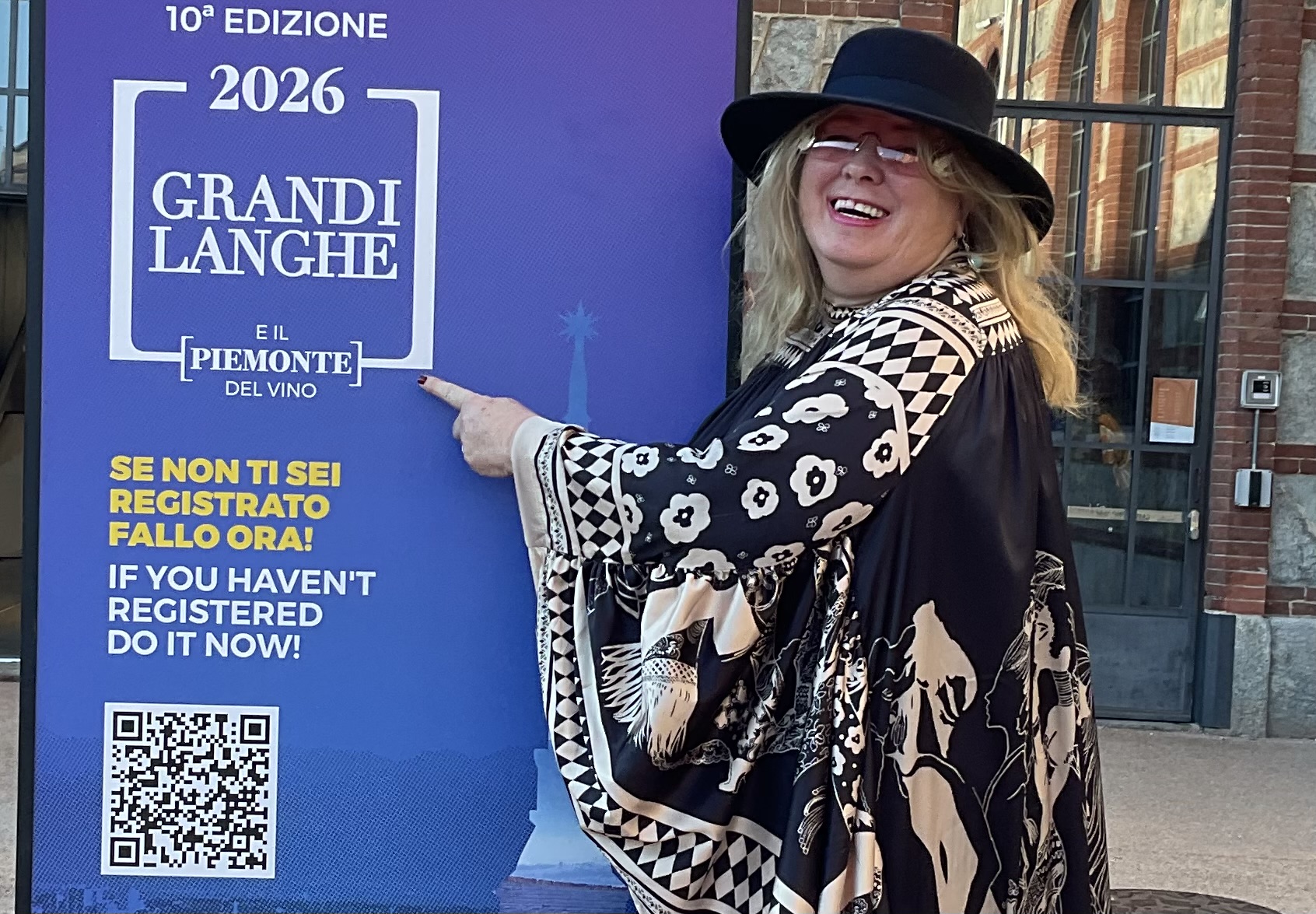
It all started 15 years ago in Alba, when Barolo, Barbaresco, Langhe and Roero were still one consortium and the idea of setting up a system was mainly a necessity for survival. "The first edition took place here, in the Langhe," recalls Francesco Monchiero, now president of Piedmont Land and former president of the Consorzio del Roero. "The goal was to bring buyers to the area, show them the places and tell them about the wine, right from where it comes from."
The model that served as a reference was clear from the beginning: Burgundy. Not as an imitation, but as a structure and good practice to draw example and inspiration from. "The Langhe and Roero have many similarities to Burgundy: small farms, average areas of four or five hectares, limited production." Figures that make it difficult to enter international markets alone. "We are talking about companies that produce 40,000 bottles. The cost of being present at major trade shows is often prohibitive."
From itinerant event to Piedmont wine fair
Grandi Langhe originated that way, as an itinerant event between Barolo, Barbaresco, Roero and Langhe, with shuttles to publicize the areas. Then came the evolution: first every two years, then in Alba under the umbrella of Doc Langhe, until the decisive move to Turin. "The event grew, the numbers increased, and the space in Alba was no longer sufficient," he says. Turin offered connections, facilities and services. "An airport, a train station, hotels. Everything needed for an international event."
As of 2022, Grandi Langhe underwent a total scaling up, but remained true to its identity. Not an alternative to the big international events, but something different and incredibly unique of its kind, especially in a wine country like Italy, which is often characterized by fragmentation. "It's not the Vinitaly of Piedmont," Monchiero clarifies. "Fairs like Wine Paris, ProWein or Hong Kong have a different purpose and costs that only larger companies can bear. Grandi Langhe is the real market for Piedmontese wine, made up of small artisan companies."
Also an attraction for foreign countries
The real leap came in 2024, with the arrival of Piedmont Land, the structure that brings all of Piedmont's wine consortia around the same table, created to coordinate and strengthen the joint promotion of regional wine. "We wondered why we wouldn't try to tell all of Piedmont," he said. A choice that expanded the perimeter: from the Langhe and Roero to the rest of the region.
"We grew from 350 to almost 500 companies. For us as organizers, it was a challenge: to grow without losing audience." The result was the opposite of what we feared: "Professionals came from all over the world: the United States, Canada, Brazil, Australia. Here they can taste wines they would otherwise only discover by traveling for months through the area."
Today is Grandi Langhe, salon of Piedmontese wine". A space where Langhe, Roero, Alto Piemonte, Canavese, Alessandrino and Pinerolese come together. "All with the same image, the same surface. It's the best way to show the terroir." A concept that for Monchiero goes beyond soil and climate: "The terroir is above all the producer. Here you can meet him, talk to him, understand him."
The 2026 edition and opening to the public
With the 2026 edition, this design took an even more complete form. At Turin's OGR, the former industrial complex of the Officine Grandi Riparazioni that today has been transformed into a cultural center and space for major international events, Grandi Langhe officially presented itself as "Grandi Langhe e il Piemonte del vino" (Grandi Langheand the Piedmontwine region), opening the event to all Piedmont appellations: not only Langhe and Roero, but also Monferrato, Astigiano, Alto Piedmont, Canavese, Tortonese, Ovadese and Chierese. More than five hundred wineries and thousands of labels that tell a region that can present itself united, without renouncing its peculiarities.
The Piedmont brand
Everything is held together by the hat Piedmont. "It is a region that has made courageous choices: irrigation banned, Doc only, no Igt. Choices made to bet on quality." Today, that quality must be recognizable. "The Piedmont brand is known worldwide. By putting it on the label, consumers can get a better orientation and the lesser-known appellations are also reinforced."
So a trajectory similar to that of Burgundy. "Whether it's a village or a Grand Cru, it always says Grand Vin de Bourgogne on it." A model that Piedmont can follow. This is also borne out by the numbers: recent international research designates Piedmont as the most attractive area for wine quality and tourist appeal by 2026, still ahead of Champagne and Burgundy. "That's an important recognition. But the work is never finished. The goal is to keep improving." Exactly like Grandi Langhe: started from the territories, today grown into a system.
Side note on the workings of Grandi Langhe
After two days of full-time "residence" among the booths, there was still very noticeable complaining about the fair's admission criteria. Exhibitors want to make sales, want to get orders after the fair. However, the number of sommeliers who do not work in a restaurant or bar, podcasters and influencers offering their services was quite present. The exhibitors spoken to - yesterday between 4pm and 6pm - made between 2 and 4 new contacts for export which is relatively few. So after forwarding prices and terms of delivery, you can halve the number of contacts leading to an order.
Another much more striking phenomenon: two lists circulate. One list is sent prior to the fair to the exhibitors and contains the names of the so-called "pr" of the organizing consorzio.
The other list is sent after the fair. By sending the all-inclusive list two weeks after the fair, perhaps an exhibitor will contact you but it is a waste of time. Professional visitors from the United States, etc. are not going to book a flight to visit a winery after the fair.
Comments
Login to give reaction Your comment will be posted as soon as it is approved.