

Near future: Nebbiolo Bag in a Box
Coming: minimum 1 year - maximum 2 years before going into production
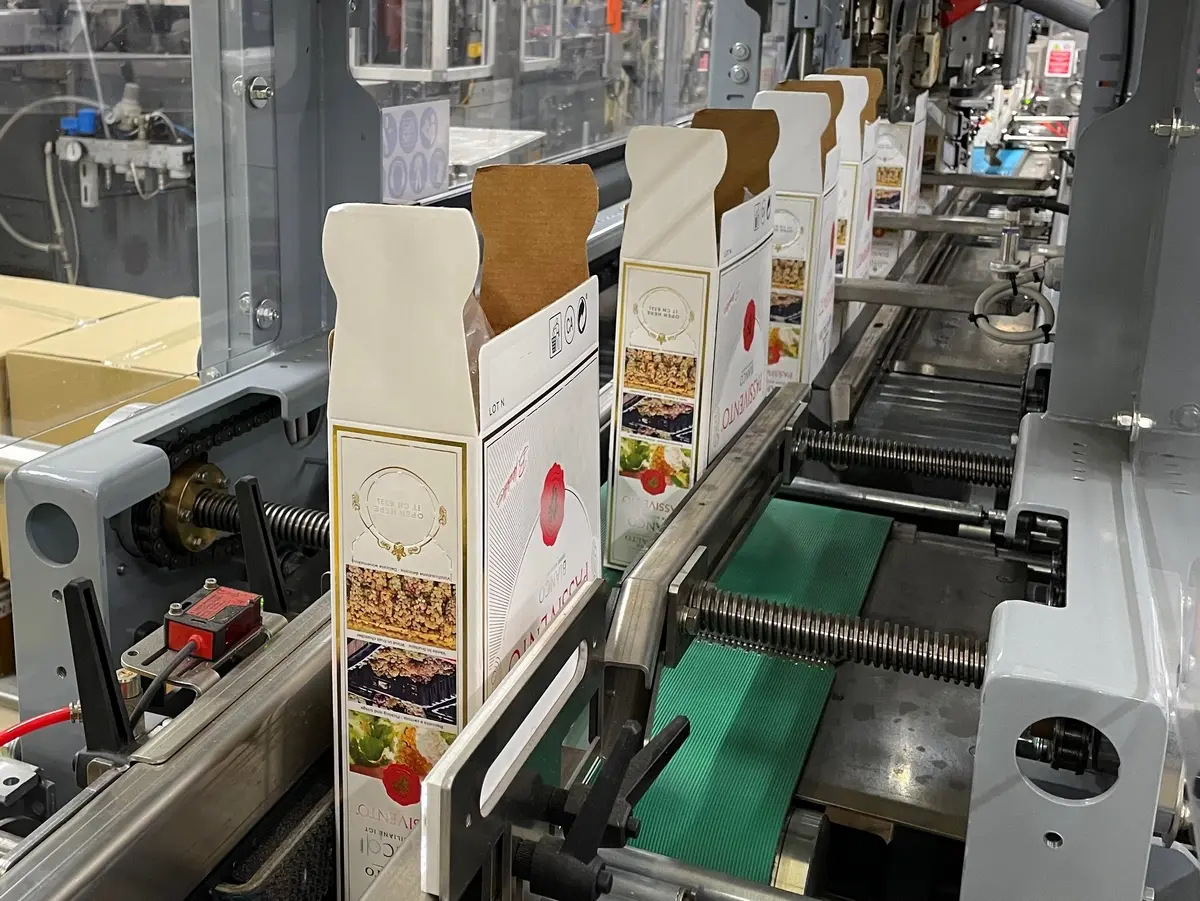
There is discussion among producers after the Consorzio Barolo Barbaresco Alba Langhe e Dogliani decided to sell wines under the Doc Langhe Nebbiolo also in bag-in-box packaging. At Grandi Langhe, the event honoring wines from Piedmont, the change is being discussed which, having been approved in the assembly, now awaits the next institutional steps: first Turin, then Rome and finally Brussels.
The conservative party
The first party is that of the conservatives, who are not in favor of the change. According to Domenico Battaglino and Alessandra Aldieri, managers of Villadoria in Serralunga d'Alba, the new format may help get rid of unsold stock, but the choice of these formats limits the reputation: "That's a pity, after years of putting energy into building the brand. The demand comes from the needs of Northern Europe and from restaurants that want to offer wine by the glass. For our company, it would be complicated because it requires a special packaging line. Langhe Nebbiolo can also age, but you can't count on developing the wine in a bag-in-box made of plastic."
Those who say "no" without question include mostly the smaller wineries. "I was not in favor of it: bag-in-box makes no sense for nebbiolo, I see it rather for Langhe rosso. There is a reputation problem: that's how the idea of a low-quality wine is conveyed. Small and medium-sized wineries are certainly not interested," said Giovanna Garesio of winery Garesio in Serralunga d'Alba.
Monica Rocca of the Albino Rocca winery in Barbaresco also responds gruffly, "What a shame: bag-in-box doesn't help the appellation's image. For small companies like us it makes no sense, maybe it helps the bigger ones. The quantity of Langhe Nebbiolo has increased too much." Luca Gagliasso of the Mario Gagliasso company in La Morra concludes, "A good idea as packaging instead of a basket bottle, but not to sell the appellation. There has been too much expansion in recent years: it may solve the problem of surpluses, but it should have been done earlier."
But even among conservatives there are those who use this format. "Our winery packages dolcetto in bag-in-box as 'red wine.' But it is a strange beast: out of 500 packages, 499 wines are good, but one tastes like vinegar. The risk of oxidation is high; the packaging is not very reliable. With Langhe Nebbiolo in bag-in-box, in my opinion, you add an extra shift to the nebbiolo: it is a wine that sells well, but you should not overexploit it, because then the toys will break. My opinion as a "dolcettista" is: call it red wine or generic Langhe, but not nebbiolo". This says Giovanni Abrigo of Abrigo Fratelli, a winery in Diano d'Alba, who suggests, "I would rather try something for young people, preferably with alternative metal packaging, because the bag-in-box allows oxygen to pass through."
The 'Nì' group
Then there are the in-between positions. "Bag-in-box should not be allowed, but there are stocks in the basement and they have to be sold. Action should have been taken earlier by limiting plantings, now there is already too much Langhe Nebbiolo.
It's a measure only for the big wineries, but they make sure the wine from the region is sold, so that's fine," admitted Marco Lo Russo of Baldissero winery in Treiso.
According to Andrea Autino, oenologist at Dosio winery in La Morra, "There has been a huge increase in Langhe Nebbiolo: the product is not being absorbed. For certain markets in northern Europe, I don't see it as something negative: maybe it repositions the appellation, but an outlet is needed when there are large volumes. However, I would not like to see it in autogrill in Italy. In any case, we are not planning to do it".
Young people for the yes camp
The "yes" camp is very large and consists mostly of young people. "I see the bag-in-box as a means to appeal to a younger audience that doesn't have much to spend. I have many friends who would like to taste it but can't buy a bottle, so this is a good solution," says Umberto Bera of Bera winery in Neviglie.
Of course, he adds, "it is a resource that must be well managed: I would buy it from serious companies. The risk is that it is only used by big companies that have to sell the product. Moreover, the figures of unsold stock are frightening: that's what it's for. We Piedmontese are traditionalists, think of the screw cap, for example.
But if the bag-in-box is managed properly. The market is changing: young people like to drink, they just don't have money," he stresses. Alberto Pittatore of Bric Cenciurio in Barolo is not against it either: "It's a way to sell wine, it's not necessarily a worse product. It's certainly meant to help companies that have large volumes and a lot of unsold product, and it also increases the buying opportunities for consumers."
Much enthusiasm from Michela Adriano, last generation of the Adriano Marco e Vittorio winery in Alba and representative of the "Sbarbatelle" group.
"There is a demand for it in the markets of northern Europe, where the packaging is very well appreciated: if the wine sells well in the bag-in-box, one can also switch to the bottle.
I don't think this is a devaluation of the product, as long as attention is paid to quality. Langhe Nebbiolo has many facets, so it is accessible to everyone: it serves to give value and reach everyone," she explains. She then adds an original point of view: "Small wineries naturally focus on the bottle, but for the new generations something could change: there are already websites selling high quality bulk wine. Young people might be sensitive to this.
Moreover, glass can be wasteful in transport and waste disposal: in mountain huts, bag-in-box would be an excellent solution. For example, we have Dolcetto in bag-in-box for mountain huts: at first I didn't like it, but now I don't see any problems with it. Our region has a traditional approach and it may not look pretty, but if you see the need, you can think positively about it.
The bag-in-box packaging is also an opportunity for Giovanna Bagnasco of Agricola Brandini in La Morra: "We might not use it, but that's not blasphemy. If it benefits the spread of nebbiolo, then it's fine. Bag-in-box is meant for those with abundant production. In countries like Norway, especially young people are used to taking wine in bag-in-box. Maybe some romance is lost, but it is a modern way of consuming."
The point of view of historic companies
"Ninety years ago our family revolutionized by switching to bottles, when wine was still sold in basket bottles at that time. We don't make bag-in-box packaging at our home: I think that's a bit extravagant for the world of nebbiolo, it doesn't suit us. We produce only from our own vineyards: some companies have to throw away unsold stock, but better planning was needed," says Roberta Ceretto of the historic Ceretto winery in Alba. She does not believe this is helpful in attracting young people: "Those I see in restaurants are more selective, better informed and aware: they have many alternatives with other alcoholic drinks or non-alcoholic drinks and I don't know if they are looking for a cheaper wine. In big cities, people are queuing up for a croissant or a loaf of bread because it went viral on TikTok: there's a different approach to food and wine, it's not just the price that attracts. In any case," she concludes, "I am confident: the age of those who come to the winery has dropped tremendously and they are drinking wine." Alberto Cordero of the Cordero di Montezemolo winery in La Morra is positive: "In some countries this innovation is very well received, it goes hand in hand with quality, it is not belittled and it is more sustainable. We have a different mentality, but the Swedes like to buy it. So why not?".
Claudio Fenocchio of the company Giacomo Fenocchioin Monforte d'Alba closed the round. "Four or five years ago I was against it, but the planting of Langhe Nebbiolo is out of control: there is too much planting, it is better to stop. I see no harm in marketing wine in this way. There is an evolution going on: my father sold in basket bottles, today the bag-in-box can leave the local markets, I also see many in France and Burgundy." According to Fenocchio, "The customer who uses this format is not looking for a premium product, but a good product at a reasonable price: thus it can be a way to bring young people closer and drink wine with the family. The big wineries will take advantage of this opportunity, but this path is better than distillation, which affects suppliers. The following year the grapes will cost less, as always happens.
Comments
Login to give reaction Your comment will be posted as soon as it is approved.