

The Gavi market is strongly oriented abroad
For many years, the Piedmontese wine appellation, which today boastsno fewer than 14 million bottles on more than 1,600 hectares, accounting for sales of 70 million euros,has found its main outlet in international markets.
The figures speak for themselves: England 62%, United States 13%, Germany 6% and Russia 4% are the main buyers of this DOCG, which is sold in more than a hundred countries.
As for sales channels, today Gavi is mainly sold in wholesale distribution followed by the on-trade (48%).
During this time period, my fellow sommelier AIS/online journalist is freelancing for Made In Piedmont Wines on site to have an in-depth look at this DOCG during various Consorzio activities. But in advance this in "avant première".
Gavi DOCG: past-present-future
Cortese, grown in Piedmont and, to a lesser extent, in Lombardy and Veneto, is part of the typical landscape of that southeastern promontory, bordering the municipality of Genoa
The first mentions of Cortese date back to 1659, when some letters mentioned "all the vines of Cortese," although viticulture in the area is said to have begun even as early as 972.
Over the centuries, the area came under Genoese rule, first as a defense and trading post, then as a resort for the nobility.
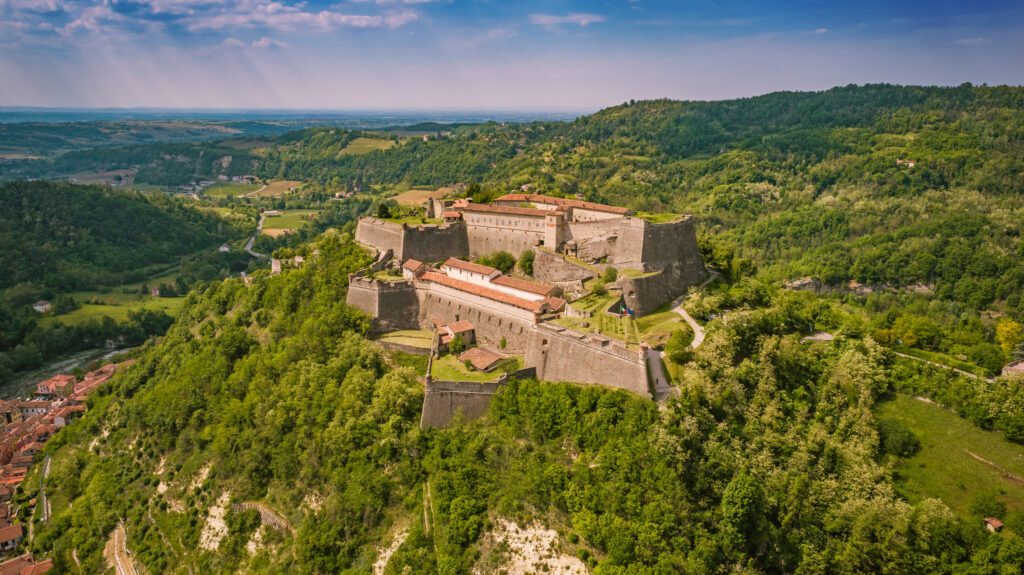
Central to this was initially the Fortress of Gavi, which in the 17th century gave way to the summer residences of the most important families from the capital of Liguria.
Subsequently, the aristocracy proclaimed the cortese grape as the court grape and encouraged its cultivation, making Gavi synonymous with dry white wine within a few decades.
Therefore, the presence of a great white wine in Piedmont is concrete evidence of the deep connection the area around Gavi has always had with the cuisine of the lords of Genoa, which goes perfectly with cortese grape.
At the time, cortese, like almost all European grape varieties, was among the most widely cultivated in the area, but it too was affected by phylloxera and threatened to disappear. It was finally rediscovered and promoted in the early 1950s by Mario Soldati, writer, journalist and great lover of wine culture.
To this day, the province of Alessandria remains the main cradle of this wine, and with 11 municipalities notably Bosio, Capriata d'Orba, Carrosio, Francavilla Bisio, Gavi, Novi Ligure, Parodi Ligure, Pasturana, San Cristoforo, Serravalle Scrivia, Tassarolo. In 1998 the designation Gavi DOCG was created, building on the already existing DOC from 1974, and reserved for white wines made exclusively from 100% Cortese, available in the variants still, light sparkling, sparkling and also riserva.
An area of 1,600 hectares, with a unique terroir that is reflected in the glass.
Geologically, the area is divided into Terre Rosse, Fascia Centrale and Terre Bianche, with different soils and microclimates, and with their own characteristics, making it possible to recognize each time the structure, finesse, body, flavor, minerality and typical aromas, giving the taster a sensory journey with each glass.
Since 1993, the Consorzio Tutela has been committed to protecting and making the Gavi name known worldwide. The consortium aims to preserve the thousand-year-old viticultural history of the area and the deeply rooted wine culture of the appellation, and has ensured that its wines based on 100% Cortese grape are widely acclaimed.
Thanks to tastings, workshops, conferences, courses, projects and initiatives such as the Premio Gavi la Buona Italia and the festival Di Gavi in Gavi, efforts are being made to preserve and improve the production and the area.
However, the Consorzio does lose sight of one issue:
-Gavi may be on the rise internationally but in enotecas in Alba e.g. you can hardly find Gavi. Tourists usually visit not only Gavi but also Alba as the center of the most popular wines such as Nebbiolo, Barolo and Barbaresco.
-At up to more than a few wine bars/trattorias in Gavi, even Gavi wine is not on the wine list. This generates comments on social media channels that one can drink Gavi in London or elsewhere but not in one's own terroir.
So there is some work to be done in Gavi terroir after all....


Comments
Login to give reaction Your comment will be posted as soon as it is approved.