

Malvasia Moscata
1 Items
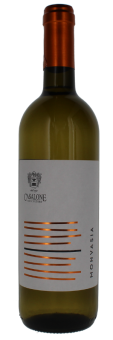
Malvasia Moscata from Piedmont: the forgotten aromatic white wine from the hills of Monferrato
You’ll find Malvasia Moscata (pronounced mahl-vah-ZEE-ah moh-SKAH-tah) in the rolling hills of Monferrato and Astigiano – mainly in Asti and Alessandria. It’s fascinating, underrated and genuinely hard to come by. Despite its name, genetically speaking it is not actually a true Malvasia – DNA testing has confirmed that it is a natural descendant of Moscato Bianco, the famous aromatic grape behind Moscato d’Asti and Asti Spumante.
That name does, however, capture something essential. The grape carries the delicate floral fragrance you associate with the Malvasia family, but overlaid with the musky character typical of Moscato. The result is a flavour profile that is unmistakable – you recognise it immediately. Malvasia Moscata has been grown in Piedmont for centuries, but almost disappeared entirely in the 20th century. Low yields and the relentless drive towards more commercial varieties – it almost didn’t survive. But in recent decades, a handful of small artisanal producers have rediscovered the grape and refused to let it disappear.
The grape
Malvasia Moscata ripens early to mid-season and thrives best on the chalky clay soils of the Monferrato hills – the same terroirs that produce superb Moscato and Barbera. Naturally low-yielding. Small bunches of thin-skinned, golden-amber berries which, when fully ripe, develop intense floral notes – particularly terpenes – in remarkable concentration.
What does that mean in the glass? The aromas really stand out – it is one of the most fragrant grapes in the whole of Piedmont. Orange blossom, elderflower, jasmine and rose petals are the first to emerge. Underneath lies a musky layer: sage, musk, white pepper and exotic spices. The acidity is crisp and juicy, ensuring the whole doesn’t feel overpowering. And it works in dry, sweet, sparkling and passito styles without really losing its identity.
Where it’s made
Malvasia Moscata can appear under various Piedmontese appellations. Monferrato Bianco DOC is often the most common designation for varietal wines. Piemonte Bianco DOC covers the broader regional category, whilst Piemonte Moscato DOC applies to sweet sparkling versions. However, many top examples simply appear as Vino Bianco or IGT Vino da Tavola – artisanal producers who prefer creative freedom rather than having to conform to strict DOC requirements.
How it tastes
Dry Malvasia Moscata
Orange blossom, elderflower, white peach, lychee, sage, musk, candied ginger, white pepper. Medium-bodied and technically dry, but the aromas create a lush impression that seems almost sweet. The finish is long and fragrant, ending with a delicate hint of bitter almond and herbs.
Sparkling Malvasia Moscata (Frizzante or Spumante)
Fresh peach, apricot, elderflower, orange peel, exotic herbs. Light and lively, often slightly sweet (amabile), with soft bubbles that carry the aroma beautifully. It simply brings a smile to your face – a true Piedmontese aperitif.
Sweet & Passito Malvasia Moscata
Candied apricot, honey, dried orange peel, saffron, ginger, raisins, beeswax, dried herbs. Rich and concentrated, yet thanks to its lively acidity and intense aroma, it doesn’t feel heavy. Top-quality passito ages beautifully – 10 to 20 years is realistic for the finest examples.
Food pairings
Thanks to its aromas, Malvasia Moscata pairs particularly well with dishes that conventional white wines really struggle with.
Dry Malvasia Moscata
Asian and spicy dishes are where this wine really comes into its own – Thai, Vietnamese and Indian curries, Sichuan dishes, sushi with ginger and wasabi.
It pairs just as well with aromatic Mediterranean dishes: Moroccan tagines, couscous with vegetables, Middle Eastern mezze.
For something a little closer to home: try it with fresh cheeses such as Robiola, goat’s cheese, burrata or herb-infused ricotta.
Antipasti are also an excellent match – vitello tonnato, prosciutto with melon, smoked salmon, fennel and orange salad.
Vegetarian dishes such as asparagus risotto or fennel gratin are a natural pairing,
and lake fish – trout, perch, pike with herb sauces – pairs with it with true elegance.
Sparkling Malvasia Moscata
The ultimate Piedmontese aperitivo: breadsticks, olives, focaccia, cured meats.
But it goes just as well with a brunch – quiches, frittatas, fruit salads, prosciutto and melon.
Spicy snacks such as Asian dumplings, samosas and spring rolls go well with it.
The same applies to fresh fruit: strawberries, peaches, apricots, tropical fruit.
Sweet & Passito Malvasia Moscata
First, the desserts – apricot tart, peach cobbler, almond cake, bonet, panna cotta, hazelnut biscotti.
With cheese, think Gorgonzola dolce, matured Robiola, Castelmagno, blue cheeses with honey.
Foie gras and rich pâtés are a natural pairing.
And sometimes it needs nothing at all – sipped slowly on its own as a vino da meditazione, it is delightful.
Serving temperature
Dry: serve at 10–12 °C
Sparkling: 6–8 °C
Sweet and passito: 10–12 °C